Emergency Water Extraction in Magnolia, AR: What to Expect
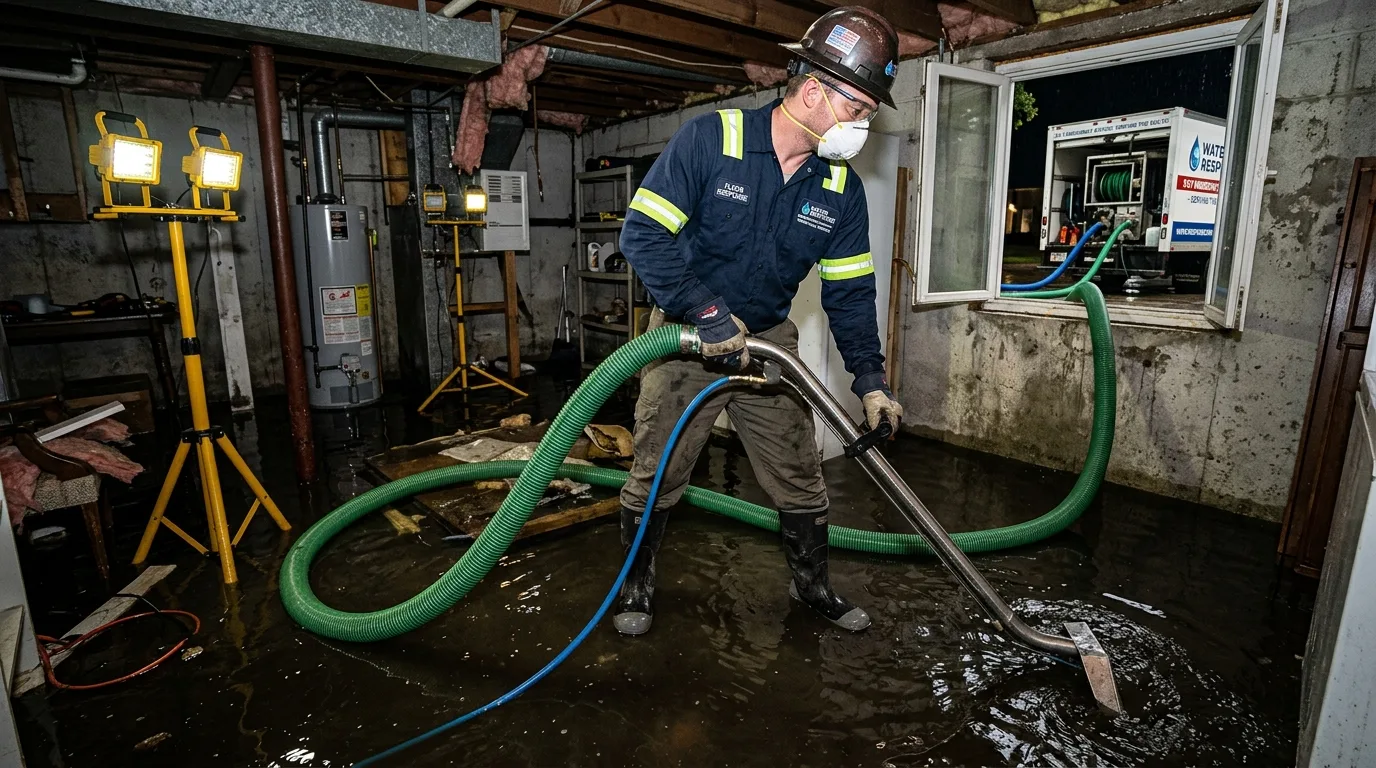
Who offers 24/7 emergency water extraction in Magnolia, Arkansas? That’s the question homeowners across Columbia County ask at 2 a.m. when a storm surge has pushed water through their ground-floor doors or a burst pipe is still running inside a wall. In this post, we cover exactly what emergency water extraction involves, what equipment is used, what the timeline looks like, and what you can do while you wait for the team to arrive.
Emergency Water Extraction in Magnolia — 24/7
We dispatch within 60 minutes throughout Columbia County. Call (877) 698-1311 immediately.
Why Emergency Water Extraction in Magnolia Demands Fast Action
Emergency water extraction Magnolia homeowners need begins the moment standing water appears — not the next business day. Magnolia’s humid subtropical climate creates a hard deadline: mold germination begins within 24–48 hours on wet organic materials when temperatures are above 60°F, which describes virtually every month of the Arkansas year except January and February. By hour 48, carpet pad, drywall, and insulation that could have been dried in place are becoming demolition candidates.
This is especially important for homes near Logoly State Park to the northeast and Lake Columbia to the northwest, where the combination of significant rainfall events (Magnolia averages 54 inches annually) and low-lying terrain means water can accumulate quickly. The June 2025 Columbia County flooding event demonstrated how rapidly conditions can escalate — 2–4 inches of rain in 24 hours caused road damage across the county and pushed water into homes that had no prior flooding history.
The rule is simple: call immediately, not after you’ve moved furniture and tried to mop up. Fast professional extraction saves money, prevents mold, and produces better insurance claim documentation than DIY efforts.
Types of Water Extraction Events
Storm flooding: Category 3 contaminated water that requires full extraction, antimicrobial treatment, and removal of saturated porous materials. Requires the highest level of protective protocols.
Burst pipe water: Typically Category 1 clean water but often the highest volume — a 3/4” supply line can release hundreds of gallons per hour. Fast extraction and structural drying can save most materials if started within 2–4 hours.
Appliance overflow: Dishwasher, washing machine, or water heater discharge — usually Category 2 gray water. Volume is lower but saturation of surrounding flooring and cabinetry is rapid.
Sewage backup: Category 3 contaminated water requiring maximum protective protocols, full removal of contaminated porous materials, and comprehensive antimicrobial treatment.
Crawlspace flooding: Standing water in the crawlspace following heavy rain, driven by clay-soil hydrostatic pressure common in Columbia County. Requires crawlspace-specific extraction equipment.
How It Works: The Extraction Process Step by Step
On arrival: Our team conducts a rapid assessment to identify water category, locate the source, and take initial moisture readings at key points. Thermal imaging identifies water that has traveled behind walls and under floors. For safety, we check for electrical hazards before entering flooded areas.
Extraction begins: Truck-mounted extraction units — significantly more powerful than any portable rental unit — are connected and deployed first. For areas inaccessible to truck-mounted equipment (crawlspaces, tight utility areas), submersible pumps and industrial wet/dry vacuums take over. Carpet and padding extraction uses specialized wand attachments that draw water from deep within flooring systems.
Moisture mapping continues: While extraction is running, additional moisture readings are taken throughout the structure to identify the full extent of moisture penetration. This data determines which materials can be dried in place and which must be removed before structural drying equipment is set up.
Material removal decisions: Carpet pad, heavily saturated insulation, and sections of drywall with significant moisture penetration are removed at this stage — before drying equipment is set up — because they would otherwise block airflow to structural materials and prevent effective dehumidification.
Structural drying setup: Commercial air movers and dehumidifiers are placed in a calculated configuration based on the affected square footage and construction type. Equipment is set to run continuously.
Water in Your Magnolia Home Right Now?
Call (877) 698-1311 — we dispatch within 60 minutes throughout Magnolia and Columbia County, day or night.
What to Do While Waiting for Extraction Team
These steps take minutes and meaningfully reduce damage:
- Shut off the water main (if the source is a plumbing failure) — the shutoff is typically near the water meter or where the main line enters the home
- Turn off electricity to affected areas at the breaker panel if there’s any risk of water contact with outlets or wiring
- Move valuables and electronics off the floor and out of wet areas to dry locations within the home
- Do not use a regular vacuum to extract water — it will damage the vacuum and is ineffective for structural drying purposes
- Take photos of all visible damage before any cleanup — these are important for your insurance claim
- Do not disturb Category 3 water (visibly contaminated floodwater or sewage backup) without proper PPE — exposure risk is real
What you should not do: run ceiling fans in a flooded room (they circulate contaminated air), apply bleach to mold you can see (it doesn’t penetrate porous materials and masks the problem), or attempt to dry the structure using household fans alone — they move air but don’t remove moisture from the structure.
Cost Factors for Emergency Water Extraction
Water extraction in Magnolia is priced within the overall mitigation scope: $3,500–$18,000 depending on the event. Extraction for a contained single-room burst pipe may run $500–$2,000 before structural drying costs. Full flood events average $2,887–$3,350 for Columbia County residential properties, at $14–$17 per square foot.
The factors that increase extraction cost are water category (Category 3 requires more personnel and PPE), volume of standing water, and material removal decisions (carpet and pad removal adds labor). Homeowners insurance typically covers emergency water extraction costs for sudden and accidental events. We document the extraction process thoroughly for insurance purposes.
Frequently Asked Questions
How fast can you respond to a water emergency in Magnolia?
We dispatch within 60 minutes to Magnolia and all Columbia County communities including Waldo, Stamps, Lewisville, McNeil, Taylor, and Emerson. Our emergency line is staffed 24 hours a day, 7 days a week, including holidays. Call (877) 698-1311 and we’ll confirm dispatch immediately.
Can I stay in my home during water extraction?
For Category 1 clean-water events (burst pipe, appliance overflow), you can typically remain in unaffected areas of the home during extraction and drying. For Category 2 and 3 events involving gray or black water, we recommend vacating during extraction due to airborne contaminant risk. We advise based on the specific conditions at your property.
Will my insurance cover emergency water extraction?
Arkansas homeowners insurance covers emergency water extraction for sudden and accidental water events — burst pipes, appliance failures, and sudden roof leaks. Flood damage from storm water rising from outside the home requires separate NFIP or private flood insurance. We work directly with adjusters and provide extraction documentation that meets carrier requirements. See our guide on homeowners insurance coverage for water damage in Arkansas.
Magnolia Water Damage Restoration — Ready 24/7
Call (877) 698-1311 for emergency water extraction throughout Columbia County. Fast dispatch, IICRC-certified, insurance documentation included.
Related: