Why Magnolia's Clay Soils Mean More Crawlspace Water Problems
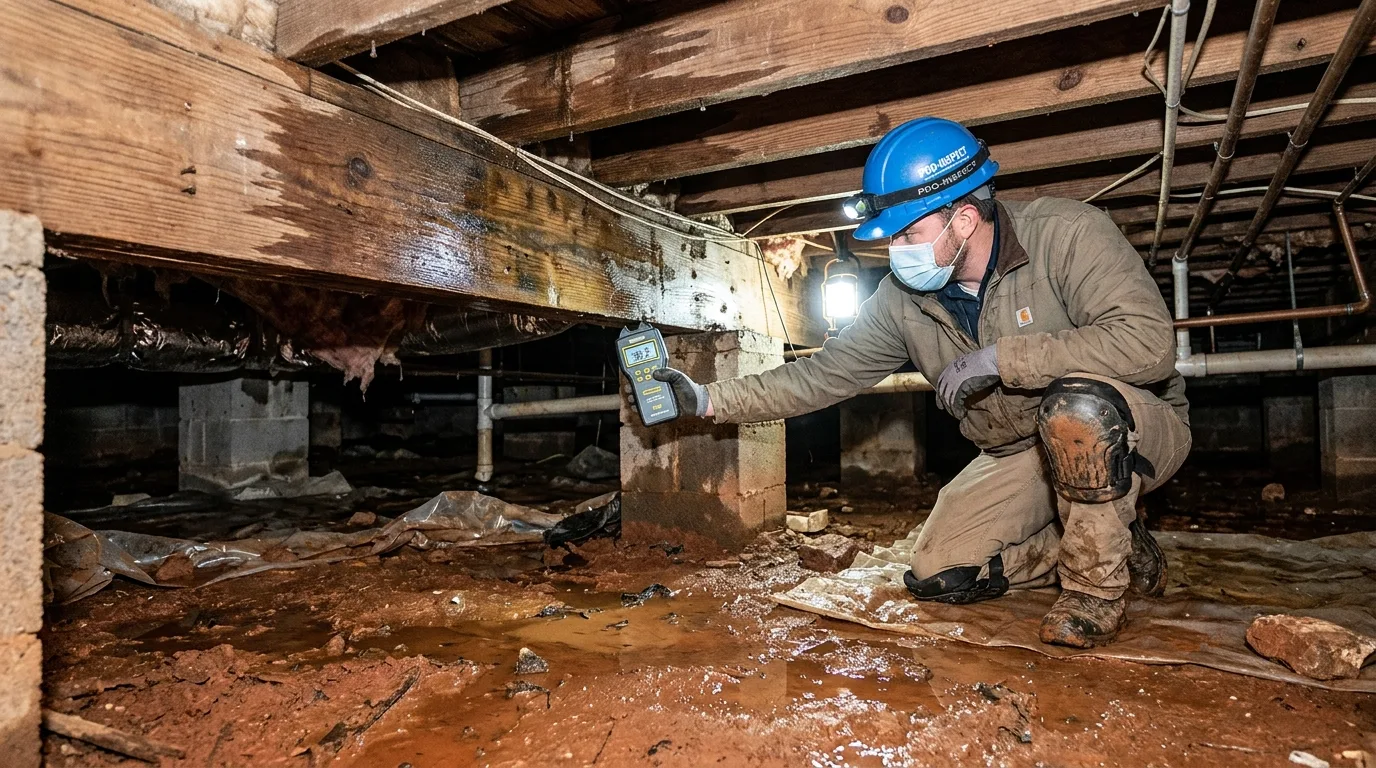
Magnolia homeowners who’ve had a crawlspace inspection done often hear the same thing: “You’ve got moisture down here.” For many of them, there’s been no flooding event, no burst pipe, no roof leak — yet the crawlspace is wet, the floor joists are showing mold, and the first floor of the house smells musty by late spring. The explanation is specifically local: Columbia County’s clay-rich soils create a moisture environment that operates independently of any discrete water event, and most restoration guidance written for sandy-soil or northern climates doesn’t address it. This post explains the mechanism and what actually works.
Crawlspace Moisture in Your Magnolia Home? Get an Assessment.
We specialize in clay-soil crawlspace moisture solutions for Columbia County homes. Call (877) 698-1311.
Why Magnolia’s Clay Soils Cause Crawlspace Water Problems
Magnolia’s clay soils crawlspace moisture connection begins with the specific soil composition of Columbia County. Unlike the sandy soils of the coastal plain or the rocky substrates of the Ozarks, south Arkansas soils are predominantly clay-rich alluvial deposits — the kind of expansive clay that changes volume with moisture content, swelling when saturated and shrinking when dry.
This expansive behavior creates a year-round moisture cycle against Magnolia foundations. During spring — when Magnolia receives its heaviest rainfall, with May averaging 4.52 inches — the clay soils surrounding foundations become saturated and swell. Saturated clay doesn’t drain quickly like sand; it holds water near the surface and against foundation walls. The hydraulic pressure from this saturated clay — called hydrostatic pressure — pushes moisture through the small gaps, cracks, and porous sections of crawlspace walls and floors. This happens even in crawlspaces that appear sealed, because the pressure is working against every contact point between the soil and the structure.
The summer contraction cycle then creates the second phase of damage. As Magnolia’s hot, dry late summer (August through October) dries the clay, it shrinks — pulling away from foundation walls and opening new gaps at the contact surface. When the next rainfall event saturates the clay again, water moves through these newly created pathways before they close again. Each wet-dry cycle opens and closes this moisture pathway, gradually creating more and more points of entry. Properties throughout the N Washington and Blake Barker neighborhoods deal with this progressive deterioration over years and decades without necessarily having a single dramatic flood event.
How Clay-Soil Moisture Affects Crawlspace Structures
Floor joists and subfloor: Sustained elevated humidity in a crawlspace — even without standing water — keeps the relative humidity above 70% for extended periods. At this humidity level, mold growth on exposed wood is essentially inevitable over time. Floor joists typically show surface mold within one or two rainy seasons of inadequate vapor barrier protection. Subfloor delamination (the layers of plywood separating from each other) follows from sustained moisture exposure.
Vapor barriers: Standard 6-mil plastic vapor barriers — the thin sheeting commonly installed in older Magnolia crawlspaces — degrade significantly over time, especially when subjected to the seasonal clay-soil movement that punctures and displaces them. A damaged vapor barrier that no longer creates a continuous seal allows ground moisture to evaporate freely into the crawlspace air.
Rim joists: The rim joist — the framing member that runs along the perimeter of the crawlspace, connecting the floor joists to the foundation wall — is often uninsulated and exposed to outside air through foundation vents. In south Arkansas clay-soil conditions, the rim joist area is one of the highest-priority mold risk locations because moisture from both the soil (hydrostatic pressure) and the exterior air (summer humidity) converges there.
Interior humidity elevation: Crawlspace moisture that evaporates into the crawlspace air rises through floor gaps, electrical penetrations, and plumbing penetrations into the living space. The result is elevated indoor relative humidity — often 5–15 percentage points above what outdoor conditions alone would produce — that makes air conditioning less effective and supports dust mite populations and mold growth throughout the home.
Clay Soil Crawlspace Solutions for Magnolia Homes
From vapor barrier upgrades to sump pump installation, we provide lasting crawlspace moisture solutions for Columbia County homes. Call (877) 698-1311.
What Actually Works for Clay-Soil Crawlspace Moisture
Heavy-duty vapor barriers: Replacing thin 6-mil sheeting with reinforced 20-mil vapor barriers is the foundational improvement for Columbia County crawlspaces. The heavier material is more resistant to puncture from soil movement, resists UV degradation from crawlspace lighting, and maintains its seal through the seasonal expansion-contraction cycles of Magnolia’s clay soils.
Crawlspace encapsulation: A fully sealed crawlspace — where all walls, piers, and floors are covered with vapor barrier and all vents are sealed — creates a controlled environment that dramatically reduces moisture intrusion from soil and outside air. This approach converts the crawlspace from a vented “outdoor” space to a conditioned indoor space, preventing the summer humidity condensation that contributes to joist mold even in the absence of standing water.
Sump pump installation: For crawlspaces where water accumulation from hydrostatic pressure is regular and significant, a sump pump provides active water removal. The pump automatically removes water that enters the crawlspace before it accumulates, working with rather than against Magnolia’s spring rainfall patterns.
Interior drainage systems: A perimeter drain system (French drain) inside the crawlspace that channels water to a sump pump is the most comprehensive solution for severe hydrostatic pressure situations — collecting water before it can pool and directing it to removal.
Rim joist insulation and sealing: Sealing the rim joist area with rigid foam insulation eliminates one of the most common pathways for both moisture intrusion and outdoor air infiltration.
Practical Uses of This Knowledge for Magnolia Homeowners
- Before buying a home in Magnolia: Request a crawlspace moisture assessment as part of your inspection — especially for any property in the Magnolia South, Columbia Rd, or Blake Barker neighborhoods where clay soil conditions are typical
- If you notice musty odors in spring: Schedule a crawlspace inspection promptly — spring is when clay-soil hydrostatic pressure peaks and crawlspace conditions are at their worst
- After any flooding event: Have the crawlspace specifically assessed even if the main flooding was above grade — clay soils often route water into crawlspaces after storm events even when no direct flooding entered from above
- For older Magnolia homes: If your home was built before 1990 and hasn’t had a crawlspace update, your vapor barrier is likely 6-mil polyethylene or less — replacement is worth considering proactively
Frequently Asked Questions
Is crawlspace moisture from clay soils covered by homeowners insurance in Arkansas?
Typically no — moisture intrusion from hydrostatic soil pressure is generally classified as a maintenance issue or a condition of the property, not a sudden and accidental event covered by homeowners insurance. However, if crawlspace moisture has caused structural damage to floor joists (which it frequently does over time), some policies may cover the structural repair component. Flood insurance through the NFIP does not cover crawlspace moisture intrusion that isn’t directly caused by a flood event. We can advise on documentation approaches that maximize the likelihood of covered treatment.
How do I know if my Magnolia home has clay-soil crawlspace problems?
Key indicators: musty odors rising from floors (especially in spring), soft or springy flooring, elevated indoor humidity despite adequate HVAC, visible mold on floor joists during a crawlspace inspection, standing water in the crawlspace after heavy rain with no clear entry point, and efflorescence (white chalky deposits) on concrete foundation walls. Properties built in the 1960s through 1990s in Columbia County are most likely to have this condition without yet having had it addressed.
How long does crawlspace encapsulation last in Magnolia’s climate?
A properly installed 20-mil reinforced vapor barrier encapsulation system with a functioning sump pump typically lasts 10–20 years with minimal maintenance in Magnolia’s climate. Annual inspection to verify vapor barrier integrity and sump pump operation — ideally before spring storm season — extends system life and catches degradation early. The underlying soil conditions don’t change, but a well-maintained encapsulation system keeps them from affecting the structure.
Stop Crawlspace Moisture at the Source in Magnolia
Magnolia Water Damage Restoration provides clay-soil crawlspace solutions throughout Columbia County. Call (877) 698-1311 for a free assessment.
Related: