Complete Guide to Water Damage Restoration in Magnolia, AR
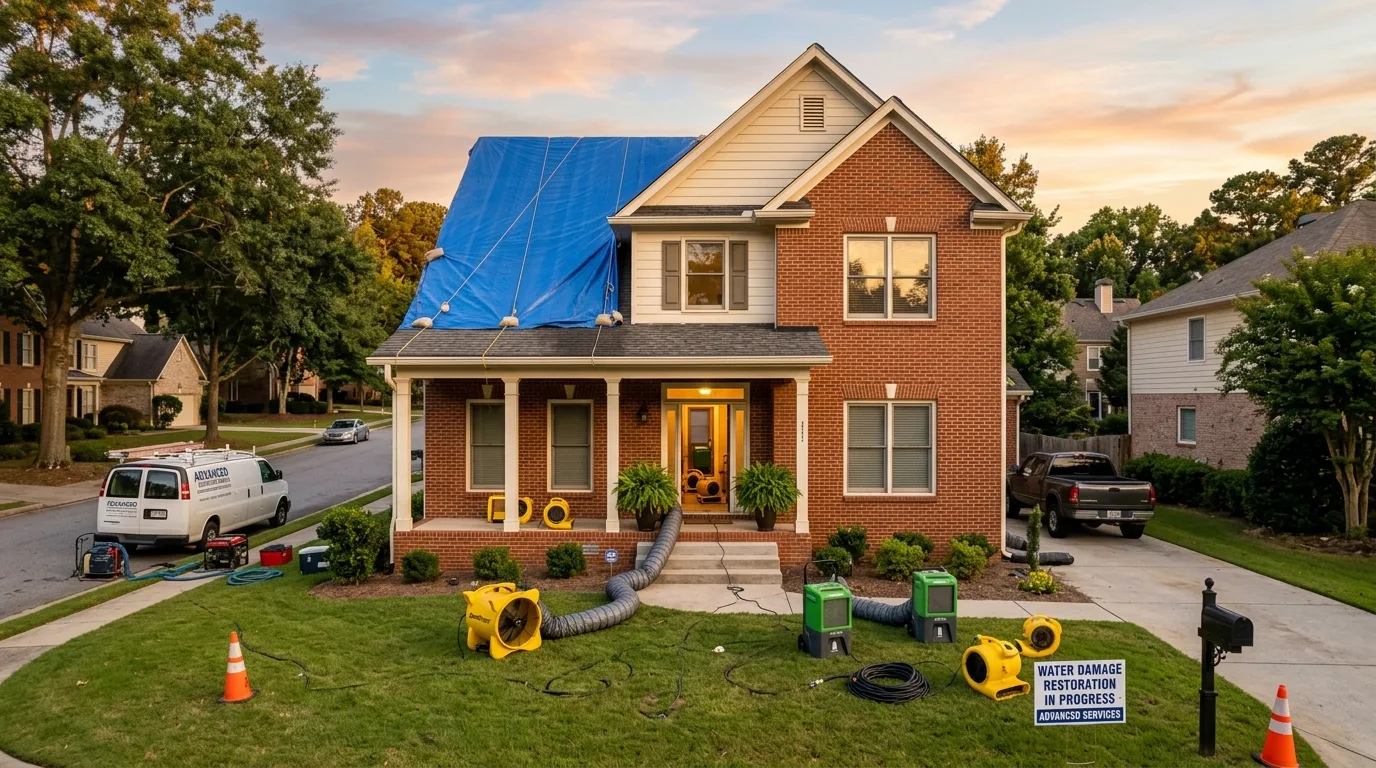
When water enters a Magnolia home — whether from a spring storm, a burst pipe, or the slow creep of crawlspace moisture — the recovery process is more complex than most homeowners expect. In this guide, we cover how water damage happens in Columbia County, what the restoration process involves, how much it costs, how to work with insurance, and which local resources apply to Magnolia property owners.
Water Damage in Your Magnolia Home? Get Help Now.
Magnolia Water Damage Restoration responds 24/7 — call (877) 698-1311 for emergency dispatch throughout Columbia County.
Why Water Damage Restoration Matters for Magnolia Homeowners
Water damage restoration in Magnolia is time-critical in a way that differs from many other home repairs. Magnolia’s humid subtropical climate — averaging 54 inches of rain per year with peak rainfall in May — means that after water enters a structure, the warm, humid conditions accelerate mold growth dramatically. Mold colonies can begin developing within 24–48 hours on wet drywall, carpet backing, and wood framing in Magnolia’s climate. By 72 hours, mold is spreading and some materials that could have been dried in place must now be demolished and replaced, increasing restoration costs significantly.
Properties throughout the N Washington corridor and Columbia Rd neighborhoods deal with this reality after every major storm. Understanding the restoration timeline — and why fast response directly controls your final bill — is the most important thing Magnolia homeowners can take from this guide. A 24-hour response vs. a 72-hour response can mean the difference between a $4,000 job and a $12,000 job for the same initial event.
The clay-rich soils common throughout Columbia County create a secondary dimension: even after a flood or pipe burst is addressed, moisture persists in crawlspaces and against foundation walls through hydrostatic pressure from surrounding saturated clay. A water damage restoration process that stops at surface drying without addressing this subsurface moisture will produce incomplete results.
Types of Water Damage in Magnolia Homes
Category 1 — Clean Water: Water from a supply line, toilet tank (not bowl), or clean rain intrusion through a roof. Least complex to remediate; most materials can be dried in place if addressed quickly.
Category 2 — Gray Water: Water from washing machine discharge, dishwasher overflow, sink drain backups, or toilet bowl overflow (urine only). Contains bacteria and requires antimicrobial treatment; porous materials in contact require removal.
Category 3 — Black Water: Storm floodwater, sewage backup, or rising groundwater. Heavily contaminated; all porous materials in contact must be removed. The June 2025 Columbia County flooding event that caused widespread road damage involved Category 3 water that required full contaminated-water protocols for affected homes.
Crawlspace and Structural Moisture: Not always classified as a Category event, crawlspace moisture intrusion driven by clay-soil hydrostatic pressure is a distinct problem type common in Magnolia. Requires specialized assessment and treatment separate from standard flood cleanup protocols.
The Water Damage Restoration Process
Step 1: Emergency Response and Water Extraction The process begins with emergency water extraction — removing all standing water using truck-mounted pumps, submersible units, and wand extraction for carpet and flooring. This step begins within 60 minutes of your call for all Magnolia and Columbia County properties.
Step 2: Moisture Mapping and Assessment After extraction, technicians use thermal imaging cameras and penetrating moisture meters to map the full extent of moisture penetration — including water that has traveled behind walls, under floors, and into structural cavities invisible to the naked eye. This step determines what materials can be dried in place and what must be removed.
Step 3: Structural Drying Commercial-grade air movers and dehumidifiers are deployed in a calculated configuration based on the structure’s square footage, construction type, and moisture levels. Daily monitoring tracks progress until all affected materials reach IICRC S500 drying targets. Antimicrobial treatments are applied where mold risk is elevated.
Step 4: Mold Prevention and Remediation If mold has already begun developing — or if the event timeline made mold development likely — IICRC S520-certified mold remediation is performed concurrently with or immediately after structural drying.
Step 5: Reconstruction After drying is confirmed, reconstruction begins: replacing drywall, insulation, flooring, cabinetry, and other materials removed during cleanup. We coordinate with licensed contractors for structural repairs and document every phase for insurance purposes.
Questions About Your Magnolia Restoration Project?
Call (877) 698-1311 for a free assessment and honest timeline estimate for your Columbia County property.
How Much Does Water Damage Restoration Cost in Magnolia?
Water damage restoration costs vary widely based on scope, water category, and how quickly cleanup begins. Here are the Columbia County benchmarks based on current market data:
Small projects (single room, Category 1): $3,500–$5,000
Medium projects (multiple rooms or Category 2): $5,000–$10,000
Large projects (whole-home, Category 3, or structural damage): $11,000–$18,000
Columbia County flood damage average: $2,887–$3,350 per project
Per-square-foot mitigation rate: $14–$17
The most important cost variable is time-to-response. Every hour that water sits in a structure increases penetration depth and material losses. A detailed breakdown is available in our post on water damage restoration costs in Magnolia for 2026.
Practical Uses of This Restoration Knowledge
- After a spring storm flood: use Category 3 protocol awareness to ensure your contractor applies antimicrobial treatment and removes contaminated porous materials — not just extracts water and sets fans
- After a burst pipe: use the thermal imaging expectation to verify your contractor maps moisture in wall cavities, not just visible surfaces
- Planning a crawlspace remediation: use the clay-soil context to evaluate whether a contractor’s proposed solution addresses hydrostatic pressure or only surface moisture
- Before filing an insurance claim: use the documentation framework (moisture logs, thermal images, photos) to verify your contractor provides insurance-ready records
- Evaluating restoration quotes: use the per-square-foot benchmarks ($14–$17) to evaluate whether quotes are within the Columbia County market range
Water Damage Restoration Cost Factors
Water category is the biggest single cost driver — Category 3 events (storm flooding, sewage backup) cost 30–60% more than Category 1 clean-water events of the same size because of demolition, antimicrobial treatment, and disposal requirements.
Time to response directly affects material salvageability. Dryable materials become demolition materials after 48–72 hours in Magnolia’s humid conditions. Faster response = lower total cost.
Crawlspace involvement adds cost specific to Columbia County homes. Clay-soil hydrostatic pressure often extends moisture problems into the crawlspace even when the primary event was above grade.
Structural damage from prolonged moisture exposure — warped framing, compromised subfloor — requires structural contractor involvement beyond standard restoration scope.
Frequently Asked Questions
How do I know if I have water damage in my Magnolia home?
Common signs include musty odors, soft or discolored spots on walls or ceilings, warping of wood floors, visible mold, elevated indoor humidity, and springy or soft flooring — all common in Magnolia’s humid climate. Many homes in the Blake Barker and Midtown Magnolia neighborhoods have crawlspace moisture that isn’t discovered until a visible symptom appears on the first floor. Read our guide on signs of hidden water damage in your Magnolia home for a full diagnostic checklist.
Does homeowners insurance cover water damage restoration in Magnolia, AR?
Arkansas homeowners insurance typically covers sudden and accidental water damage — burst pipes, appliance overflow, and roof leaks that cause water intrusion. Gradual leaks, flood damage from rising water (which requires separate flood insurance through NFIP or private carriers), and maintenance neglect are generally excluded. See our full breakdown in does homeowners insurance cover water damage in Arkansas?
How do I find a reliable water damage restoration contractor in Magnolia?
Look for IICRC certification (WRT and AMRT credentials), 24/7 emergency availability, documented insurance claims assistance, and thermal imaging capability. All major competitors serving Magnolia — including Restore-It and PuroClean — operate from locations 45–60 miles away, meaning local response time is a genuine differentiator. For a full vetting guide, see our emergency water extraction overview for Magnolia.
Ready to Start Your Magnolia Water Damage Recovery?
Call Magnolia Water Damage Restoration at (877) 698-1311 — IICRC-certified, insurance-ready, 24/7 emergency response throughout Columbia County.
Related resources: