After the Flood: What Magnolia Homeowners Should Do First
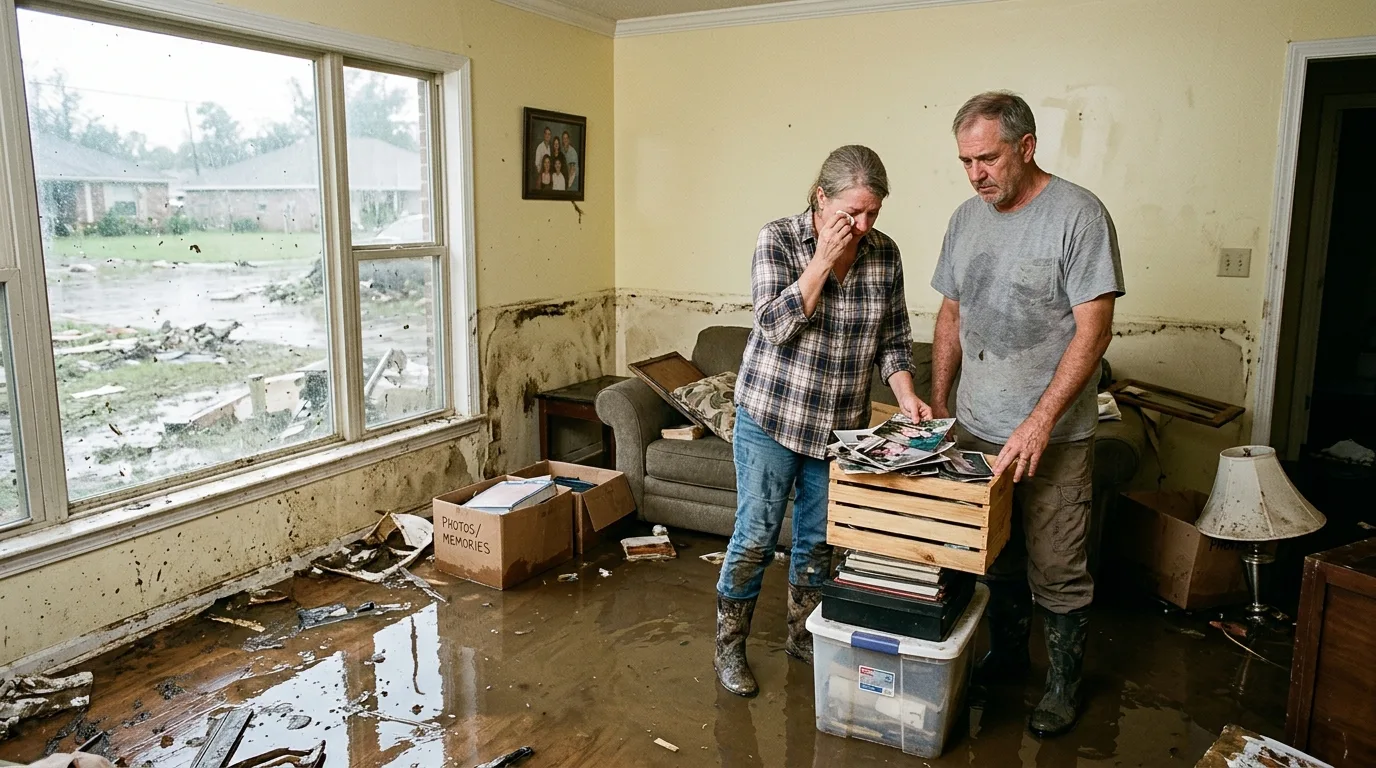
The hours immediately after a flood in Magnolia are the most consequential for recovery — both for your property and your insurance claim. Every decision made in the first 24 hours affects how much of your home can be saved, how much mold develops, and how smoothly your insurance claim proceeds. This guide gives Columbia County homeowners a clear action sequence for the moment flooding stops through the end of day one.
Flood in Your Magnolia Home? Call Immediately.
Magnolia Water Damage Restoration responds 24/7 throughout Columbia County. Call (877) 698-1311 now.
Why the First 24 Hours After a Flood Matter So Much
After the flood water damage timeline in Magnolia operates on a tighter clock than most homeowners expect. Magnolia’s humid subtropical climate — with spring temperatures in the 60–80°F range — creates near-ideal mold germination conditions within hours of a water event. Research on mold growth rates establishes that colonies begin developing within 24–48 hours on wet organic materials like drywall and wood at temperatures above 55°F. In practical terms: the difference between a $4,000 cleanup and a $14,000 cleanup is often whether professional extraction began within the first day.
The June 2025 Columbia County flooding event provided a real-world demonstration of this principle. Homeowners who called for professional cleanup within hours of the water receding salvaged significantly more materials than those who waited until the following day to begin — even though both groups experienced the same storm event with the same initial water volume.
Beyond mold, the first 24 hours establish your insurance claim. Documentation gathered while damage is at its maximum — standing water depth, waterline marks, damaged contents — is far more compelling to an adjuster than documentation taken days later when some conditions have changed.
Hour 0–2: Safety First
Electrical safety is your first priority. Do not enter any flooded area before shutting off power at the main breaker — or confirming with your utility that power to the structure is disconnected. Floodwater and live electrical circuits are a lethal combination. If you cannot safely reach the main breaker from outside the flooded area, call your power company for an emergency shutoff.
Verify structural safety. If floodwater was significant (more than 18 inches of standing water, or fast-moving water that exerted force on walls), the structure may have shifted. Look for cracks in foundation walls, doors or windows that no longer align with their frames, or visible bowing in walls before entering.
Identify water category. Storm floodwater is Category 3 contaminated water — it contains bacteria, sewage, and agricultural or chemical runoff. Do not wade through floodwater without rubber boots and gloves. Do not let children or pets enter flooded areas.
Hour 2–4: Document Everything
Before any cleanup begins, document the damage comprehensively. This documentation is the foundation of your insurance claim, and it can only be captured before cleanup starts:
- Photograph standing water in every affected room, including a reference object for depth (a ruler, a door frame mark)
- Photograph the high-water mark on walls — this line will fade quickly as things dry
- Photograph all damaged furniture, appliances, flooring, and personal property in place before moving anything
- Note the date and time of photographs
- If the flooding came from outside, photograph the exterior conditions including any visible storm damage
Call your insurance carrier to report the claim as soon as safety and documentation allow. You don’t need to know the full scope of damage to initiate the claim — report that a water damage event occurred and ask about your duty to mitigate.
Documenting Flood Damage in Magnolia? We Help with Insurance Claims.
Our team provides moisture logs, thermal images, and comprehensive documentation that satisfies insurance carrier requirements. Call (877) 698-1311.
Hour 4–8: Begin Professional Water Extraction
With safety confirmed and documentation complete, call Magnolia Water Damage Restoration at (877) 698-1311 to begin emergency water extraction. Don’t wait until the next business day — Category 3 floodwater that sits overnight significantly increases the amount of material that must be removed rather than dried, adding thousands of dollars to recovery costs.
While waiting for the team to arrive:
- Move salvageable items that are not in contact with floodwater to dry areas — move furniture off wet carpet (wooden legs will stain the carpet if left in contact)
- Open interior doors to allow air circulation in unaffected areas
- Do not run HVAC systems if floodwater may have entered the air handler or ductwork — this can distribute contaminated air throughout the home
What to leave to the professionals: water extraction, determination of what materials can be saved vs. must be removed, antimicrobial treatment decisions, and any work involving Category 3 contaminated materials.
Hour 8–24: Mitigation and Documentation Continues
After the extraction team arrives, the first full day of restoration involves: completing water extraction, conducting thermal imaging moisture assessment, removing materials that cannot be dried in place (carpet pad, saturated drywall sections, insulation), applying initial antimicrobial treatment to exposed structural surfaces, and setting up structural drying equipment.
By the end of day one, you should have: professional extraction underway, an initial estimate of the damage scope, documentation suitable for an insurance claim, and a timeline for the full restoration process. The adjuster’s visit typically happens within 2–5 days — by then, photos and moisture logs from day one establish the pre-mitigation baseline.
Practical Checklist for the First 24 Hours
- □ Shut off electricity to flooded areas
- □ Verify structural safety before entering
- □ Wear protective equipment — rubber boots and gloves for Category 3 water
- □ Document everything with photographs before any cleanup
- □ Call insurance carrier to initiate claim
- □ Call Magnolia Water Damage Restoration at (877) 698-1311 for emergency extraction
- □ Move salvageable items off wet flooring
- □ Do not run HVAC if water may have entered ductwork
- □ Keep receipts for any emergency expenses (temporary accommodation, emergency repairs)
Frequently Asked Questions
Can I start cleaning up before the insurance adjuster arrives in Magnolia?
Yes — most Arkansas homeowners insurance policies require prompt mitigation and allow you to begin cleanup before the adjuster visits, provided you document damage thoroughly before cleanup starts. Your insurer may even reduce your claim if you delay mitigation and allow damage to worsen. Just preserve your documentation, and work with a professional who can provide the moisture logs and thermal images that support your claim.
What if I can’t afford professional water extraction right now?
Call your insurance carrier immediately — most policies cover emergency water extraction as part of your dwelling coverage, meaning you pay your deductible and the extraction is covered. Many restoration companies, including ours, work directly with insurance carriers on billing and can begin work before the claim is formally processed. Call us at (877) 698-1311 to discuss options for your Columbia County property.
How do I know if my Magnolia home is safe to re-enter after a flood?
Re-entry is safe when: the main electrical panel is dry and undamaged (or utility confirms power is off), standing water has receded from the main living areas, you have appropriate PPE for Category 3 water contact, and there’s no visible structural compromise (cracking foundation walls, misaligned doors). If in doubt, wait for our team to perform a safety assessment before you enter. Properties in low-lying areas near Lake Columbia or in flood-prone sections of Magnolia South should be especially cautious about structural assessment before re-entry.
Magnolia Flood Recovery Starts With One Call
Magnolia Water Damage Restoration handles every phase of flood cleanup — from first extraction to final reconstruction. Call (877) 698-1311 for 24/7 emergency response throughout Columbia County.
Related: