Protecting Your SAU Rental: Magnolia Students' Water Damage Guide
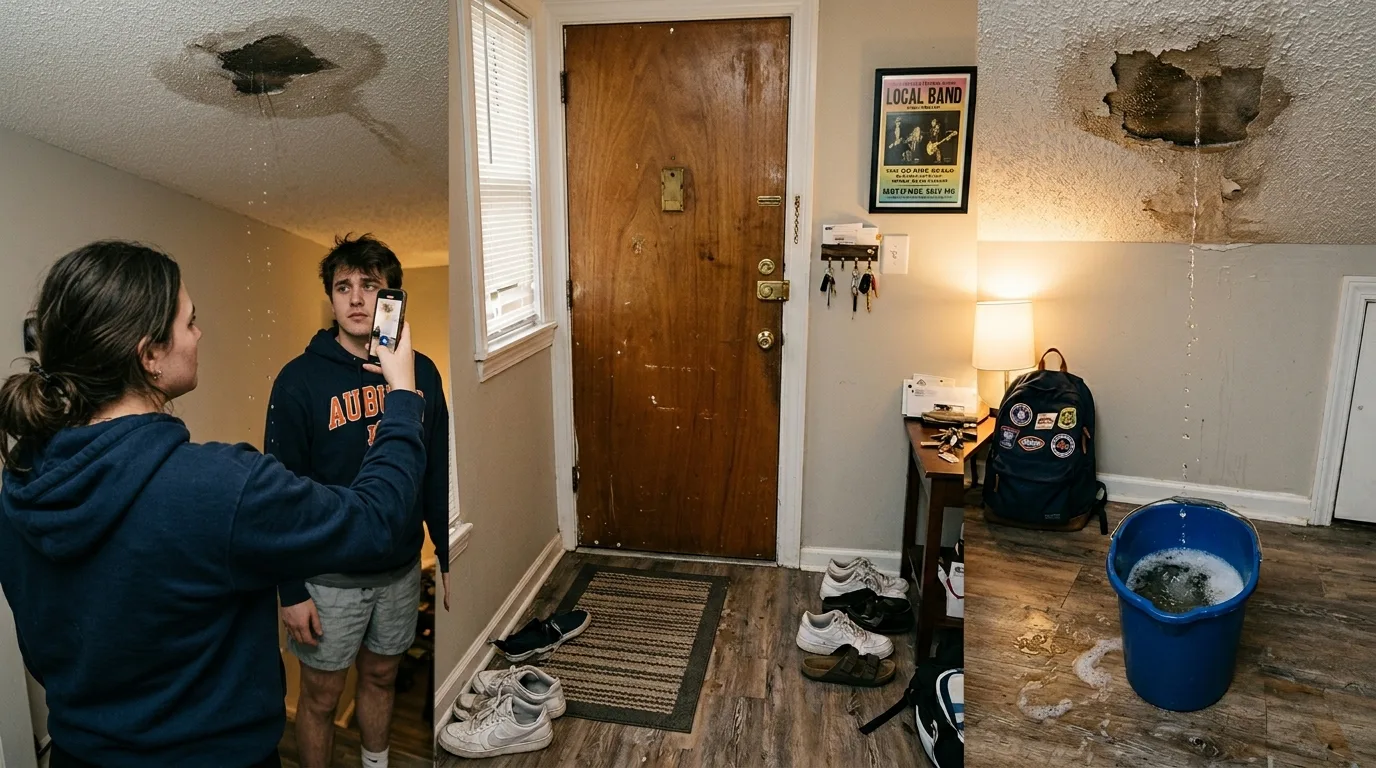
Southern Arkansas University students living in off-campus housing in Magnolia face a water damage risk they probably didn’t cover in orientation: what happens when your rental floods, a pipe bursts, or you discover mold in your apartment? This guide covers what to do immediately, what your rights are as a tenant in Arkansas, and how to protect yourself from bearing costs that aren’t yours.
Water Damage in a Magnolia Rental? We Can Help.
Call (877) 698-1311 — we serve Magnolia and the full Columbia County area including off-campus housing near SAU.
Why SAU Renters in Magnolia Face Elevated Water Damage Risk
Protecting your SAU rental from water damage starts with understanding the local context. Off-campus housing near Southern Arkansas University includes a significant amount of older construction — homes and apartment buildings built in the 1970s through 1990s that haven’t had full plumbing updates. These properties are more likely to have aging supply lines, worn roof flashing, and inadequate crawlspace moisture control than newer construction.
Magnolia’s spring storm season (March through May) coincides almost exactly with the second half of the academic year — which means SAU students are in their off-campus rentals during the peak water damage risk period. The clay-rich soils throughout Columbia County hold moisture against foundations and crawlspaces long after spring rain events end, creating ongoing moisture conditions in many older rental properties near campus.
Students in the Midtown Magnolia neighborhood and along N Washington — two of the most common areas for off-campus SAU housing — frequently report musty odors and high indoor humidity during spring semester that landlords attribute to “old house smell.” In many cases, this is actually an indicator of active crawlspace mold or slow moisture intrusion that would warrant professional assessment.
What to Do If Your Magnolia Rental Floods
Step 1: Ensure safety. Do not enter flooded areas without checking that power is off to the flooded zone. Floodwater and electricity are lethal. If you can’t safely reach the breaker panel, call your landlord and if necessary your utility company.
Step 2: Contact your landlord immediately. Water damage in a rental unit is the landlord’s responsibility under Arkansas landlord-tenant law — but you have an obligation to notify them promptly. Send a text or email with a timestamp and photos so you have documented proof of notification.
Step 3: Document everything. Photograph all visible water damage, standing water depth, damaged personal property, and any existing conditions that may have contributed to the problem (visible mold, damaged plumbing, poor drainage). This documentation protects both your security deposit and any renter’s insurance claim.
Step 4: Call for professional help. If flooding is significant and your landlord is unresponsive, or if they’re dealing with the situation but haven’t called a professional restoration company, suggest Magnolia Water Damage Restoration at (877) 698-1311. Water damage that isn’t professionally extracted and dried within 24–48 hours will develop mold — which is a habitability issue under Arkansas law.
Step 5: Understand your rights. If the property becomes uninhabitable due to water damage and mold, Arkansas law provides tenant remedies including the right to terminate the lease or withhold rent in some circumstances. Consult Student Legal Services at SAU or Arkansas Legal Services for specific guidance.
Renter’s Insurance: Why SAU Students Need It
Your landlord’s property insurance covers the building — not your belongings. A burst pipe that destroys your laptop, clothes, and textbooks is your financial loss unless you have renter’s insurance. Renter’s insurance in Magnolia costs approximately $10–$20 per month and covers personal property loss, temporary accommodation costs if your unit becomes uninhabitable, and liability protection. It is one of the most cost-effective financial protection tools available to students.
Some renter’s insurance policies also include water backup coverage for drain and sewer backup events — worth requesting specifically when comparing policies for Magnolia rentals given the spring flooding pattern.
Water Damage in Your Magnolia Rental? Call Us.
We work with tenants, landlords, and property managers throughout Columbia County. Call (877) 698-1311.
Common Water Damage Scenarios for SAU Off-Campus Renters
Burst pipe in winter: Magnolia’s winter cold snaps can freeze supply pipes in older rental properties. The landlord is responsible for repairs, but the student bears the loss of personal property without renter’s insurance.
Roof leak during spring storms: Storm damage to older roofing systems is common in Magnolia’s off-campus rental housing. A roof that was already marginal may fail during a heavy spring storm, allowing rain to enter through ceilings or walls.
Appliance overflow: A malfunctioning washing machine, dishwasher, or water heater in a rental unit can flood the unit in minutes. Document the condition of the appliance at move-in and move-out to establish responsibility.
Crawlspace mold from clay-soil moisture: Many Magnolia rental properties near SAU have crawlspace moisture issues that produce musty odors and high indoor humidity throughout the building. This is a habitability concern — if your rental consistently smells musty, document it and request professional assessment from your landlord.
Sewage backup: Spring flooding can overwhelm drainage systems and cause sewer backup into first-floor units. This is a serious health hazard (Category 3 contaminated water) and a habitability issue — your landlord must remediate immediately.
Practical Checklist for SAU Students in Magnolia Rentals
- □ Purchase renter’s insurance before move-in
- □ Document the unit condition with photos and video at move-in
- □ Note any pre-existing water damage, stains, or musty odors on your move-in checklist
- □ Save landlord contact information (cell, emergency line, and management company if applicable)
- □ Know where the water main shutoff is inside the unit or building
- □ Report any plumbing drips, moisture, or odors to your landlord in writing immediately
Frequently Asked Questions
Who is responsible for water damage repair in a Magnolia rental?
Under Arkansas law, landlords are responsible for maintaining the property in a habitable condition, including repairing water damage and addressing mold. If water damage or mold affects habitability and the landlord fails to remediate within a reasonable time after notification, Arkansas law provides tenant remedies. Keep all landlord communications in writing and document your notifications with timestamps.
Can I be held responsible for water damage in my Magnolia rental?
You can be held responsible for water damage caused by your negligence — for example, leaving a bathroom faucet running that overflows, or failing to report a dripping faucet that eventually causes significant damage. You are not responsible for water damage from the building’s structural failures, plumbing system failures, or weather events unrelated to your actions.
What should I do if my Magnolia landlord won’t fix water damage?
Document your written notifications to the landlord with timestamps. If the landlord is unresponsive and the damage affects habitability (mold growth, standing water, structural damage), contact the City of Magnolia’s code enforcement office and the Arkansas Fair Housing Commission for guidance. Student Legal Services at SAU can advise on tenant rights under Arkansas landlord-tenant law specific to your situation.
Renting Near SAU in Magnolia? Know Your Water Damage Rights.
Magnolia Water Damage Restoration works with tenants and landlords throughout Columbia County. Call (877) 698-1311 for professional assessment and restoration.
Related: