Flood Damage Cleanup in Columbia County, AR: Step by Step
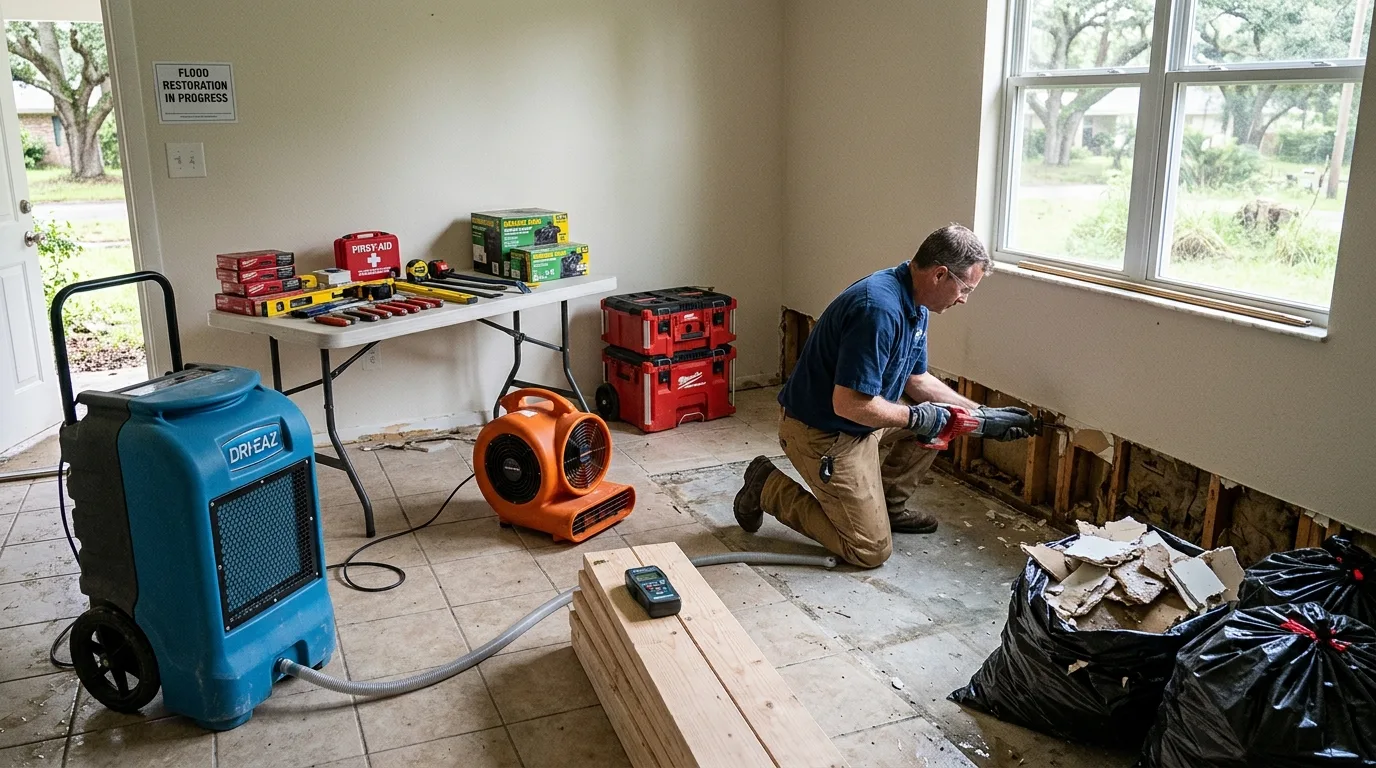
Columbia County experienced it directly in June 2025 — a severe storm system dropped 2–4 inches of rain in 24 hours, damaging roads and pushing water into homes across the county. Whether you’re dealing with the aftermath of a named storm, a flash flood from a clogged drainage system, or rising water from a nearby watercourse, flood damage cleanup in Columbia County follows a specific sequence of steps. This guide walks through every phase of that process.
Flood in Your Magnolia Home? Call for Immediate Response.
Magnolia Water Damage Restoration handles Category 2 and 3 flood cleanup 24/7 throughout Columbia County. Call (877) 698-1311.
Why Columbia County Flood Cleanup Has Unique Requirements
Flood damage cleanup in Magnolia and Columbia County differs from the generic restoration process in two specific ways rooted in local conditions. First, Magnolia’s clay-rich alluvial soils hold floodwater against foundations and in crawlspaces long after surface water recedes — homes in low-lying areas near Lake Columbia and throughout the Columbia Rd neighborhood may continue to experience moisture intrusion for days after a flood event ends. A cleanup process that ignores this subsurface moisture will produce incomplete results.
Second, Columbia County’s seasonal flooding pattern concentrates damage in spring (March through May), when rainfall peaks and soil saturation is highest from accumulated winter rainfall. Spring flood events in south Arkansas tend to involve Category 3 floodwater — contaminated by agricultural runoff, sewage, and soil — rather than the cleaner water that comes from an interior supply line burst. Category 3 cleanup requires significantly more aggressive protocols, including full removal of all porous materials in contact with the floodwater.
The steps below apply to both residential flooding in Magnolia and surrounding communities including Waldo, Stamps, and Lewisville. The process is the same; what varies is response time — our team serves all of these communities from local dispatch.
Step 1: Ensure Safety Before Entering
Before entering a flood-damaged structure, verify that the power has been shut off at the main breaker — water and live electricity are a lethal combination. Contact your utility if you can’t safely reach the main breaker. Wear rubber boots and gloves when entering any space with floodwater, especially water that has been standing for more than a few hours. Category 3 floodwater contains bacteria, sewage, and chemical contaminants that can cause serious illness through skin contact or inhalation of aerosols.
Document everything you can safely photograph from outside or just inside the entry points before any cleanup begins. These photos are critical for your insurance claim.
Step 2: Call for Professional Flood Cleanup Immediately
Flood damage cleanup in Columbia County should begin within hours, not days. Call a professional water damage restoration team at the same time you call your insurance company. Do not wait for an adjuster to visit before starting cleanup — most insurance policies require prompt mitigation efforts and allow you to begin cleanup before the adjuster arrives, provided you document damage thoroughly.
Category 3 floodwater requires professional-grade PPE, antimicrobial treatment equipment, and disposal protocols that homeowners cannot safely replicate. Attempting DIY cleanup of contaminated floodwater puts your health at risk and typically produces inadequate results that cause mold to develop within the week.
Step 3: Water Extraction
Truck-mounted extraction units remove standing water as the first priority. For deep flooding, submersible pumps are deployed first to reduce water depth before truck-mounted systems take over. Floodwater extraction for a typical residential event takes several hours; a severely flooded basement or crawlspace may take longer.
After bulk extraction, wand extraction removes water absorbed into carpet, flooring, and base materials. At this stage, the water category determines the next decision: Category 1 and 2 water may allow carpet drying in some cases; Category 3 water requires removal of all porous materials regardless of the extent of visible saturation.
Step 4: Contaminated Material Removal
For Category 3 events — which most Columbia County storm flooding events involve — all porous materials that contacted floodwater must be removed. This includes drywall (typically 12–24 inches above the flood line), insulation, carpet and carpet pad, and vapor barriers in crawlspaces. This is the step that surprises many homeowners: even carpet that appears to have only a few inches of water on it must be removed if the water was Category 3, because no cleaning process can safely remove bacterial contamination from carpet fibers.
Materials are double-bagged and disposed of in accordance with local waste guidelines. Structural framing and concrete that can be cleaned and treated are retained; structurally compromised materials are identified for replacement.
Flood Damage Cleanup in Columbia County — We Handle Every Phase
From Category 3 extraction through reconstruction, Magnolia Water Damage Restoration serves all of Columbia County. Call (877) 698-1311.
Step 5: Cleaning and Antimicrobial Treatment
After contaminated materials are removed, all remaining structural surfaces — concrete, wood framing, metal — are cleaned thoroughly and treated with industrial antimicrobial agents. HEPA air filtration units run throughout this process to capture airborne spores and contaminants. Treatment targets a 99.9% reduction in bacteria and mold spores on all treated surfaces.
Step 6: Structural Drying
Commercial air movers and dehumidifiers are deployed in a calculated configuration and run continuously. In Magnolia’s humid subtropical climate, dehumidification requirements are more aggressive than in drier climates — ambient outdoor humidity regularly exceeds 70% in spring and summer, which means equipment must work against high incoming humidity in addition to removing structural moisture. Daily monitoring tracks progress.
Step 7: Mold Inspection and Remediation
After drying is complete, an inspection determines whether any mold growth developed during the time before cleanup began. If mold is present, IICRC S520 remediation is performed before reconstruction. A post-remediation clearance test confirms acceptable spore levels.
Step 8: Reconstruction
With drying confirmed and all contaminated or moisture-damaged materials removed, reconstruction begins: new drywall, insulation, flooring, trim, and cabinetry. We document every reconstruction phase for insurance claims and provide a certificate of completion.
Cost of Flood Damage Cleanup in Columbia County
Flood damage cleanup in Columbia County costs $2,887–$18,000 depending on scope and water category. The county average for flood restoration is $2,887–$3,350 for smaller events; large-scale Category 3 events run $11,000–$18,000. Per-square-foot mitigation rates are $14–$17. For a detailed cost breakdown, see our guide on water damage restoration costs in Magnolia for 2026.
Frequently Asked Questions
Is flooding in Magnolia covered by homeowners insurance?
Standard Arkansas homeowners insurance does not cover flooding from rising water entering from outside the home — this requires separate flood insurance through the National Flood Insurance Program (NFIP) or a private carrier. Magnolia participates in the NFIP community rating program, which allows residents to purchase federally backed flood insurance. Interior water damage from burst pipes, roof leaks, or appliance failures is covered by standard homeowners policies. See our guide on homeowners insurance for water damage in Arkansas.
How do I document flood damage for an insurance claim in Columbia County?
Photograph all damage before any cleanup begins — standing water depth, waterline marks on walls, damaged contents, and exterior flooding conditions. Keep records of all communications with your insurance carrier, all contractor invoices, and any emergency expenses. We provide detailed moisture logs, thermal images, and documentation for every project that supports insurance claims and speeds adjuster review.
How long does flood cleanup take for a typical Magnolia home?
The full process from extraction through reconstruction typically takes 3–6 weeks for a moderate flooding event. The first week covers extraction and initial drying; structural drying runs through week 1–2; mold inspection and remediation (if needed) extends to week 2–3; reconstruction occupies the remaining time. Category 3 events with significant material removal take longer than Category 1 events.
Columbia County Flood Cleanup — Starting with a Call
Magnolia Water Damage Restoration provides full flood damage cleanup throughout Magnolia, Waldo, Stamps, and all of Columbia County. Call (877) 698-1311.
Related: