Spring Storm Season in Magnolia, AR: Water Damage Prevention
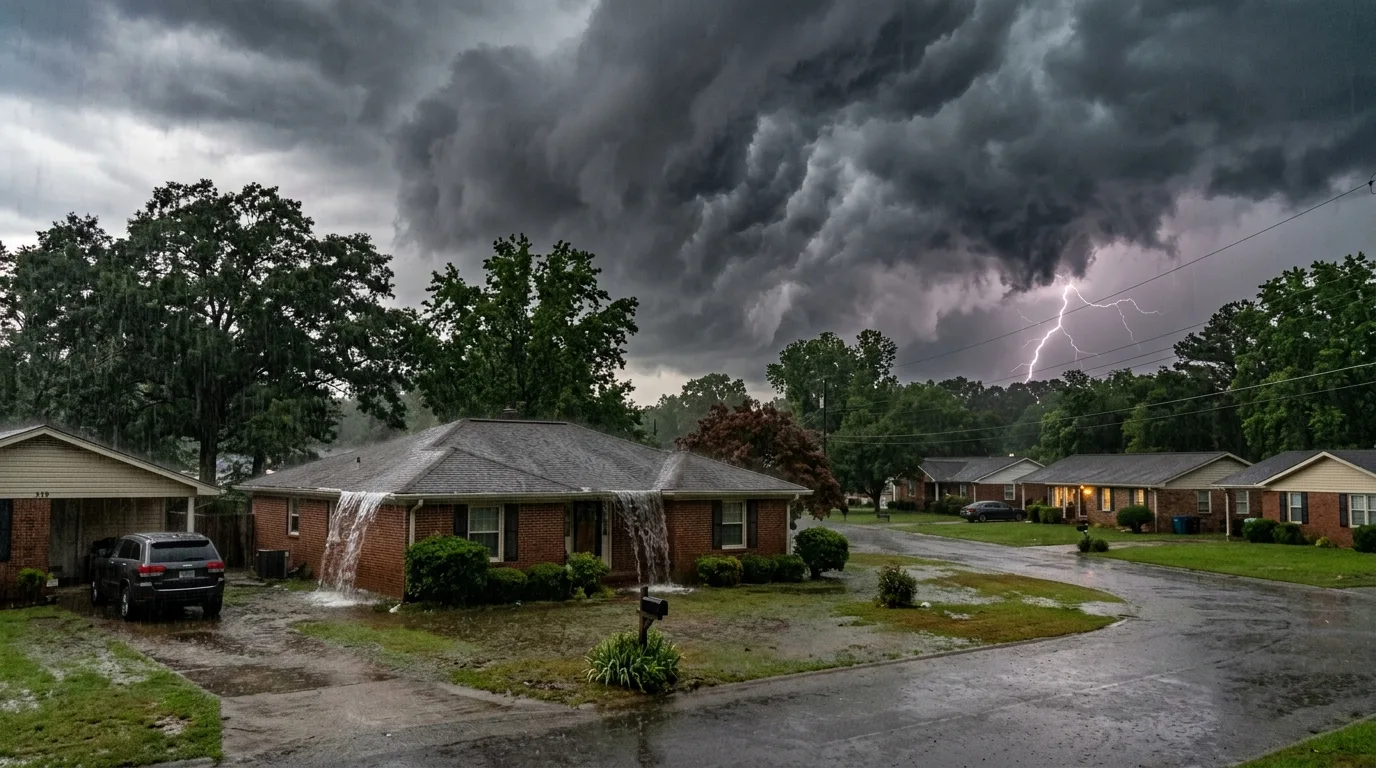
Spring is the riskiest season for water damage in Magnolia, AR — and for measurable reasons. March through May brings Magnolia’s highest monthly rainfall totals, most frequent severe thunderstorm events, and the saturated soil conditions that make every heavy rain event more likely to produce flooding than it would later in the year. This guide gives Columbia County homeowners practical steps to reduce spring water damage risk before storm season peaks.
Is Your Magnolia Home Ready for Spring Storm Season?
Call (877) 698-1311 for a free water damage assessment and prevention consultation before storm season peaks.
Why Spring is Magnolia’s Peak Water Damage Season
Spring storm season water damage prevention in Magnolia starts with understanding why spring is different from the rest of the year. Magnolia’s climate averages 54 inches of annual precipitation, with May being the single wettest month at an average of 4.52 inches. But rainfall totals alone don’t tell the full story — what makes spring dangerous is the combination of high rainfall and already-saturated soil from winter and early spring accumulation.
Clay soils throughout Columbia County — the dominant soil type in and around Magnolia — absorb water far more slowly than sandy soils. By late February and March, these soils are typically near or at saturation from winter rainfall. When March and April storms arrive, there’s nowhere for the water to go: it doesn’t percolate, it accumulates on the surface, overwhelms drainage systems, and pushes toward the lowest available point — often through a foundation wall, under a crawlspace access point, or through window wells and threshold gaps.
The June 2025 Columbia County flooding event demonstrated this pattern in acute form: 2–4 inches of rain in 24 hours caused road damage and residential flooding across properties in multiple Columbia County communities. While June falls slightly after the technical peak of spring storm season, the soil conditions and storm intensity were consistent with the spring pattern that homeowners throughout Magnolia, Waldo, and Stamps face every year from March through May.
Types of Spring Water Damage in Magnolia
Flash flooding from storm runoff: Surface water accumulating faster than drainage systems can handle, pushing toward low-lying structures. Common in properties throughout the Blake Barker and Magnolia South areas with grade that doesn’t direct water away from the foundation.
Crawlspace flooding: Saturated clay soil exerting hydrostatic pressure through crawlspace walls and floors, resulting in standing water in the crawlspace that never had a discrete entry point — it just seeped through.
Roof and ceiling intrusion: Spring hailstorms and high-wind events can damage or dislodge roofing materials, allowing subsequent rain events to enter through the roof deck before repairs are made.
Sump pump failure: If you have a sump pump, spring storm season is when it works hardest. A pump failure during a heavy spring storm event can result in rapid basement or crawlspace flooding.
HVAC condensate backup: Spring temperature swings that cause HVAC systems to run in cooling mode before drainage systems are properly serviced can result in condensate pan overflow — a minor but recurring water damage source in Magnolia homes.
Prevention Steps Before Storm Season
Check and clean gutters and downspouts: Gutters full of leaf debris from fall direct spring rain runoff against the foundation rather than away from it. Clean in late February; check again in April. Downspout extensions should discharge at least 6 feet from the foundation.
Inspect grading around the foundation: The ground should slope away from the foundation on all sides — at least 6 inches of drop over the first 10 feet from the foundation wall. Properties throughout the N Washington corridor with relatively flat lots need to be especially attentive to this.
Test your sump pump now: Pour a 5-gallon bucket of water into the sump pit to confirm the pump activates and discharges. Check the discharge line for blockages. Install a battery backup system so the pump continues operating during the power outages that accompany severe spring storms.
Inspect crawlspace vapor barriers: Look for tears, gaps, or areas where the vapor barrier has shifted. Damaged vapor barriers allow ground moisture to evaporate directly into the crawlspace, increasing mold risk throughout spring.
Check window wells and door thresholds: Ground-level windows and exterior doors should have seals and grades that direct water away. Window wells should have gravel at the bottom for drainage.
Water Damage Assessment Before Spring Storm Season in Magnolia
Schedule a pre-season assessment with Magnolia Water Damage Restoration — (877) 698-1311. Serving all of Columbia County.
What To Do If Your Magnolia Home Floods During Spring Storm Season
Step 1: Ensure electrical safety — shut off power to affected areas at the breaker panel before entering flooded spaces.
Step 2: Call Magnolia Water Damage Restoration at (877) 698-1311 immediately. Spring storm season is our peak period; we have elevated staffing and equipment ready for rapid dispatch.
Step 3: Document damage — photograph everything before any cleanup begins, including standing water depth and visible waterline marks on walls.
Step 4: Contact your insurance carrier to report the claim. You can begin cleanup before the adjuster arrives — just document everything.
Step 5: Do not use household fans or shop vacuums as primary drying tools. Category 3 storm floodwater requires professional extraction and antimicrobial treatment that household equipment cannot provide.
Cost Considerations for Spring Flood Prevention vs. Cleanup
A sump pump with battery backup costs $300–$800 installed — a fraction of the $2,887–$18,000 that flood damage cleanup costs. Gutter cleaning and grading corrections run $200–$800. Crawlspace vapor barrier replacement costs $1,500–$4,000. These prevention investments protect against the far larger cost of a flooding event and can also be used to demonstrate to insurance carriers that the property was properly maintained.
Frequently Asked Questions
How do I know if my Magnolia home is at risk for spring flooding?
Risk factors include: property in a low-lying area or near a drainage ditch or creek, clay-heavy soil that doesn’t absorb water quickly, a crawlspace without an effective vapor barrier, gutters that direct water toward the foundation, and a sump pump that hasn’t been tested recently. Properties in the Magnolia South and Columbia Rd neighborhoods with relatively flat lots and expansive clay soil are at elevated natural risk during peak spring storm months.
What type of insurance covers spring storm flooding in Magnolia?
Standard homeowners insurance covers water damage from sudden and accidental events like roof damage letting rain in or an interior appliance overflow. Flooding from storm water rising from outside — surface flooding, overland flooding — requires separate flood insurance through the NFIP or a private carrier. Magnolia participates in the NFIP. Read our guide on homeowners insurance and water damage coverage in Arkansas for a full breakdown.
Is there a specific time to schedule spring storm prevention work in Magnolia?
February and early March — before the peak of storm season — is ideal for gutter cleaning, sump pump testing, grading assessment, and vapor barrier inspection. Work done during this window has maximum protective value for the highest-risk months of March through May.
Prepare Your Magnolia Home for Spring Storm Season
Schedule a free assessment with Magnolia Water Damage Restoration before storm season peaks. Call (877) 698-1311.
Related: