Historic Home Water Damage: Restoring Magnolia's Older Properties
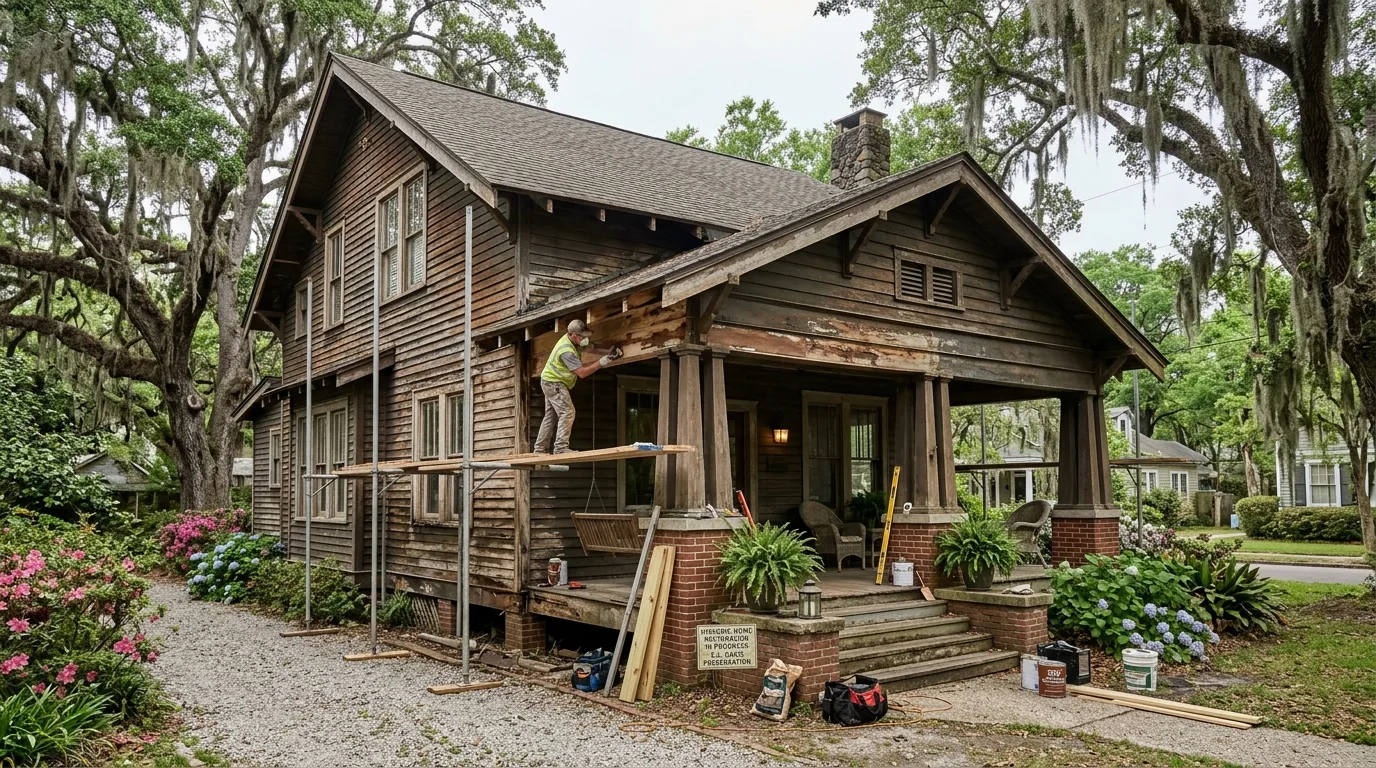
Magnolia’s Magnolia Commercial Historic District and the historic neighborhoods surrounding Southern Arkansas University represent some of the most architecturally significant residential properties in Columbia County — and some of the most complex water damage restoration projects. A home built in 1925 or 1950 presents challenges that standard restoration protocols designed for 1990s and 2000s construction don’t fully address. This guide covers the specific considerations for water damage restoration in Magnolia’s older and historic homes.
Water Damage in a Historic Magnolia Home? We Understand Older Construction.
Call (877) 698-1311 for assessment and restoration throughout Columbia County, including Magnolia's historic districts.
Why Historic Home Water Damage Restoration Differs in Magnolia
Historic home water damage in Magnolia requires a different approach than restoration of modern construction for several interconnected reasons. Older homes have different materials, different moisture dynamics, different structural systems, and potentially different regulatory requirements — and getting restoration wrong in an older Magnolia home can cause damage that’s both expensive and irreversible.
The Magnolia Commercial Historic District and the residential neighborhoods that developed in the early-to-mid 20th century around SAU and downtown represent a significant portion of Magnolia’s housing stock. These properties — built in the 1900s through the 1950s primarily — have original plaster walls, solid wood flooring, dimensional lumber framing, single-pane windows, and plumbing systems that may include original cast iron drain lines and galvanized or even lead supply pipe in the oldest cases.
When water damage occurs in these structures, the restoration response must account for how different these materials behave compared to modern construction: solid wood absorbs and releases moisture much more slowly than modern OSB or plywood; plaster walls have a different structural role than drywall; and the absence of a vapor barrier in the original crawlspace is intentional in older construction systems designed for different moisture management principles.
Specific Challenges in Magnolia’s Historic Homes
Plaster walls and ceilings: Traditional three-coat plaster over wood lath is significantly heavier and more moisture-tolerant than modern drywall — but also dries more slowly after water damage. Saturated plaster is at risk of delaminating from lath, and once it falls it’s typically replaced with modern drywall (which may be appropriate structurally but changes the character of the space). Experienced restoration in historic homes attempts to dry plaster in place wherever possible, using more conservative drying strategies than modern construction allows.
Solid wood flooring: Wide-plank or strip solid hardwood flooring in Magnolia’s older homes is irreplaceable with modern materials — original-growth wood species, widths, and character no longer exist in today’s supply chain. Solid wood floors absorb more moisture than modern engineered flooring and take longer to dry — but they can also be refinished and saved in many cases where engineered flooring would need to be replaced. Aggressive drying (too many air movers too fast) can cause cupping, cracking, and warping in solid wood that careful slower drying would prevent.
Galvanized and lead plumbing: Pre-1950 Magnolia homes may have galvanized steel or even lead supply pipe — materials that create both water damage risk (galvanized pipe corrosion failure) and restoration complexity (lead pipe material must be handled carefully during demolition). Any demolition work that disturbs old plumbing in a historic Magnolia home should be assessed by a licensed plumber for material identification.
Asbestos-containing materials: Homes built before 1978 may contain asbestos in floor tiles, pipe insulation, ceiling tiles, duct insulation, and joint compound. In Magnolia’s older housing stock — including properties near the Columbia County Courthouse and in the historic SAU-adjacent neighborhoods — asbestos is a realistic possibility. Before any demolition work proceeds in a pre-1978 home, a certified asbestos inspector should assess materials that will be disturbed. This adds cost and time but is non-negotiable from both a health and regulatory standpoint.
Original crawlspace systems: Many historic Magnolia homes have vented crawlspaces with no vapor barrier — a design that was intentional in mid-20th century construction, intended to allow moisture to ventilate out through foundation vents. The clay-soil conditions of Columbia County, combined with modern understanding of crawlspace moisture dynamics, often make encapsulation superior to the original vented design. However, transitioning from vented to encapsulated crawlspace in an older home should be done thoughtfully, with awareness of how the change affects the moisture dynamics of the whole structure.
Historic Home Water Damage Restoration in Magnolia
Magnolia Water Damage Restoration understands older construction and works to preserve historic materials wherever restoration allows. Call (877) 698-1311.
How We Approach Water Damage Restoration in Older Magnolia Homes
Our approach to historic home restoration in Magnolia prioritizes material preservation wherever structurally and hygienically appropriate. This means:
Slower, more controlled drying: Solid wood materials and plaster require longer drying times at lower air movement intensity compared to modern construction. We calibrate equipment to the material profile of the specific home — not to a generic residential restoration standard.
Conservative demolition decisions: Before removing original materials, we assess whether drying in place is achievable. A solid wood floor that can be successfully dried and refinished is far preferable to replacement with new flooring that may not match the original material.
Material testing before demolition: Any pre-1978 demolition includes material testing recommendations for asbestos and lead paint. We identify testing requirements and coordinate with certified inspectors before work begins.
Documentation for historic preservation: For properties in Magnolia’s listed historic districts, we maintain documentation of original materials and methods that may be useful for historic preservation review if reconstruction is required.
Practical Steps for Historic Magnolia Home Owners After Water Damage
- Call immediately: The 24-hour window for preventing mold growth applies equally to older and newer construction — but solid wood and plaster make it even more important to begin assessment quickly before decisions get made for you by advancing damage
- Request material-aware assessment: Specifically ask whether the restoration team has experience with plaster, solid wood flooring, and pre-1978 construction — these require different equipment settings and drying timelines than modern materials
- Ask about asbestos assessment: Any demolition work in a pre-1978 home should include asbestos testing of disturbed materials — insist on this before any cutting or removal begins
- Document original materials: Photograph original flooring species, plaster conditions, plumbing materials, and any unique historic features before restoration proceeds
Frequently Asked Questions
Is water damage restoration more expensive for historic homes in Magnolia?
Yes, generally — historic home restoration costs more for several reasons: slower, more conservative drying strategies take longer and use more equipment time; asbestos testing and abatement adds cost in pre-1978 construction; skilled labor to handle and preserve original materials costs more than standard residential labor; and demolition decisions are more complex when replacement materials may not match originals. The specific premium depends on the materials involved and the scope of the event. We provide itemized estimates that identify the cost components specific to older construction.
Can original plaster walls be saved after water damage in a Magnolia home?
Often, yes — if drying begins promptly and is approached correctly. Plaster that is saturated but not yet delaminated from lath can frequently be dried in place using carefully calibrated equipment settings. The key is not to rush the process with aggressive air movement that damages the plaster-lath bond. If saturation is severe or if delamination has already begun, replacement may be necessary — at which point the choice is between historically appropriate lime plaster restoration (expensive but period-accurate) or modern drywall.
Are Magnolia’s historic properties eligible for any special restoration assistance?
Historic properties in Magnolia may be eligible for Arkansas Historic Preservation Program (AHPP) resources, and properties with National Register designation may qualify for historic preservation tax credits for qualified rehabilitation work. The AHPP is a division of the Arkansas Department of Arkansas Heritage. Water damage mitigation itself isn’t typically eligible for preservation tax credits, but reconstruction work that follows mitigation and restores historic character may qualify for certain programs. Consulting a licensed historic preservation professional alongside your restoration contractor is advisable for significant projects.
Historic Magnolia Home Water Damage — Restore What Matters
Magnolia Water Damage Restoration approaches older construction with the care historic materials require. Call (877) 698-1311 for a free assessment throughout Columbia County.
Related: